
No. 1 PLC & SCADA Training Institute in Chennai
Looking for the best PLC and SCADA training in Chennai? EGAI offers professional, hands-on training by industry experts with 100% placement assistance.
- Hands-on sessions on real PLC hardware & software and SCADA systems
- Weekdays | Weekends | Fast-Track batches
- Structured modules for students & professionals
- 100% placement assistance
- Covers PLC, SCADA, VFD, HMI and more
Why PLC & SCADA Training at EGAI?
Chennai is the commercial hub of South India and home to global manufacturing companies. Most companies are looking for trained engineers in industrial automation, but there is a shortage of practically skilled professionals. EGAI bridges that gap by offering the best PLC training in Chennai — designed by industry experts to fill the vacuum of practical knowledge and meet automation demands.
Hands-on Training
Practical sessions on real PLC hardware & software and SCADA systems to simulate real-world automation scenarios.
Expert Trainers
Courses delivered by industry-experienced automation engineers.
100% Placement Assistance
Dedicated career team, resume preparation and unlimited interview opportunities.
Flexible Schedules
Weekdays | Weekends | Fast-Track for students and working professionals.
Certified Programmes
Globally recognised certifications on programme completion.
Fast-Track Option
Intensive short-duration tracks for professionals looking to upskill quickly.
PLC Training
PLC (Programmable Logic Controller) is a digital computer used for industrial automation — controlling machinery, factory assembly lines, light fixtures, amusement rides and more. PLCs are used across all types of industries and are designed for multiple input/output arrangements, extended temperature ranges, resistance to vibration and immunity to electrical noise.
Powered by non-volatile memory, modern PLCs offer advanced functionality including motion management, method management, relay management and sophisticated networking. PLCs monitor inputs and variables, make decisions and manage outputs to automate machines and processes.
With PLC systems, SCADA (Supervisory ControlIcon and Data Acquisition) is used for remote control and monitoring via coded signals over communication channels. Industries now totally rely on automation — creating huge demand for PLC and SCADA operators worldwide.
What is Industrial Automation?
Industrial automation is the use of control devices — PLCs, SCADA, VFD, HMI, DCS — to operate various industry processes without significant human intervention. ControlIcon strategies use advanced technologies to achieve desired performance, making automation systems essential in modern industries.
It involves advanced control strategies, modern hardware devices, sensors, signal conditioning equipment, drives, standalone computing systems, communication systems, alarming and HMI systems. Automation has been achieved through mechanical, hydraulic, pneumatic, electrical, electronic and computer means — typically in combination.
Key Automation Components
Industrial Automation in Manufacturing
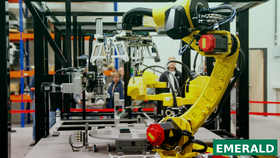
Industrial automation in manufacturing uses intelligent machines so that processes can be carried out with minimal human intervention. It applies control systems to enable equipment to operate independently — handling tasks requiring speed, endurance and precision.
Automation can be achieved through mechanical, electrical, electronic, hydraulic, pneumatic and computer means — usually two or more in combination. Today's state-of-the-art factories, ships and airplanes combine all these techniques.
The main benefits include leaner operations requiring less energy, less material and reduced labour waste — leading to improvements in quality, accuracy and precision. Modern industrial robots have high computing capabilities, improved vision systems and increasing degrees of freedom.
With the rapid development of microcomputer and software technologies, automation in manufacturing is almost totally dependent on computer and software capabilities. This is why it is often called Computer Integrated Manufacturing (CIM).
Industrial robots of the future will be multi-functional, with capabilities associated with human workers — decision-making, autonomous operation, self-diagnostic and predictive maintenance capabilities. The factory of the future will be more efficient in the utilisation of energy, raw material and human resources.
Contrary to popular belief, experience shows that automation does not cause mass unemployment. On the contrary, the mass use of robots creates more jobs. Humans and robots will work together to create a more efficient and productive workspace.
PLC & SCADA Courses
Choose the programme that fits your background, goals and timeline.
Certified Engineer in Industrial Automation
- Certified Trainer
- Dedicated Career Services
- Unlimited Interviews
Advanced Diploma in Industrial Automation
- PLCs
- Keyence
- Omron
- Mitsubishi
- Delta
- Schneider
- RACK
- Siemens
- SCADA
- Wonderware (InTouch)
- HMI
- Delta
- VFD
- Allen-Bradley
- OTHERS
- Pneumatics & Field Instruments
- Panel Wiring
Post Graduate Diploma in Industrial Automation
- Certified Trainer
- Dedicated Career Services
- Unlimited Interviews
Ready to Build a Career in PLC & SCADA?
Join EGAI's industry-led PLC & SCADA training in Chennai and take the first step toward a high-growth career in industrial automation.