
No. 1 Oil & Gas Training Institute in Chennai
Looking for the best Oil & Gas training in Chennai? EGAI offers professional, hands-on training by industry experts with 100% placement assistance.
- Practical sessions on real Oil & Gas scenarios
- Weekdays | Weekends | Fast-Track batches
- Structured modules for students & professionals
- 100% placement assistance
- Covers NDT, Piping, Oil & Gas Plant and more
Why Oil & Gas Training at EGAI?
Learning evergreen technology from EGAI makes your career rich. Our Oil & Gas courses include all recent technologies like NDT, Piping and more — delivered by experienced trainers based on industry standards, preparing candidates for real-world challenges.
Hands-on Training
Each topic is practically conducted for real-world understanding of Oil & Gas scenarios.
Expert Trainers
Industry-experienced professionals deliver every session to industry standards.
100% Placement Assistance
Dedicated career team, resume preparation and unlimited interview opportunities.
Flexible Schedules
Weekdays | Weekends | Fast-Track for students and working professionals.
Certified Programmes
Recognised certifications covering NDT, Piping, Oil & Gas and more.
Fast-Track Option
Intensive tracks available for professionals seeking rapid upskilling.
Oil & Gas
Almost all Oil and Gas are found deep underground in tiny holes in rocks. Millions of years ago, tiny plants and animals lived in the sea. When these creatures died, they sank to the bottom and got buried in layers of mud and sand. Over millions of years, intense pressure and heat changed this organic material into Hydrocarbon Liquids and Gases — what we now call hydrocarbons.
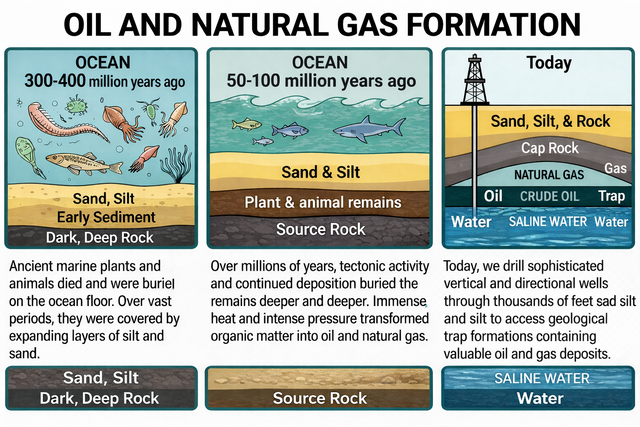
Much of the Oil and Gas production now comes from underneath the sea-bed. As extraction technology advances, production becomes possible from deeper and deeper waters. However, supplies are limited and every drop of oil burnt adds to the environmental problems created by pumping carbon dioxide into the atmosphere — a key driver of global warming.
Piping Engineering
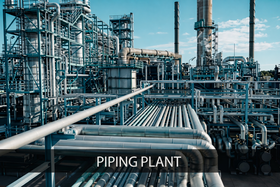
Piping Engineering involves precise calculation and software. Piping is a system of pipes used to convey fluids (liquids and gases) from one location to another. It is a critical part of any industrial plant, encompassing 3D modelling, plot planning, stress analysis, support engineering and more.
Responsibilities of a Piping Engineer
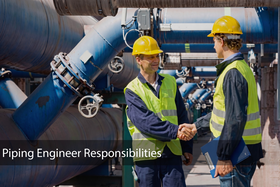
Piping design engineers are involved from the plant feasibility study through to detailed engineering and commissioning of the chemical plant.
Study process requirements and site conditions to prepare equipment layout and complete plot plan.
Co-ordinate with civil and structural engineers to finalise pipe rack, platforms, foundations and other structural requirements.
Provide support to all purchase activities and evaluate vendor documents for technical requirements.
Analyse all mechanical data sheets (MDS) and develop required mechanical drawings like nozzle orientations and support clip drawings.
Preparation of piping layout and isometrics adhering to process requirements, erection, operability, maintenance and safety.
Preparation of piping material specification (PMS) and valve material specification (VMS).
Preparation and regular updation of material take-off (MTO) as per changes in piping layout and P&ID.
Review vendor-supplied documents like pump drawings, skid plans, and equipment data sheets to ensure piping requirements are fulfilled.
Stress analysis of stress-critical lines and support marking for all isometrics.
Co-ordinate with structural and equipment departments for handling excess loads as an outcome of stress analysis.
Verify requirements of high-point vents and low-point drains for hydro testing.
Assist site construction teams with field-raised issues and provide immediate solutions.
What is Nondestructive Testing (NDT)?
Nondestructive testing (NDT) is the process of inspecting, testing, or evaluating materials, components or assemblies for discontinuities or differences in characteristics without destroying the serviceability of the part or system — when inspection is completed, the part can still be used.
Modern NDT is used in manufacturing, fabrication and in-service inspections to ensure product integrity and reliability, control manufacturing processes, lower production costs and maintain uniform quality levels. During construction, NDT ensures the quality of materials and joining processes; in-service NDT ensures products continue to have the integrity necessary for safety.
ASNT NDT L-I & L-II Certification Courses
- Ultrasonic Testing (UT)
- Radiographic Testing (RT)
- Penetrant Testing (PT)
- Magnetic Particle Testing (MT)
- Visual & Optical Testing (VT)
- RTFI (Radiographic Film Interpretation)
- General Introduction to NDT
Oil & Gas Courses
Choose the programme that fits your background, goals and timeline.
Oil & Gas Plant Engineering
- Certified Trainer
- Dedicated Career Services
- Unlimited Interviews
Advanced Diploma in Oil & Gas
- Certified Trainer
- Dedicated Career Services
- Unlimited Interviews
Post Graduate Diploma in Oil & Gas
- Certified Trainer
- Dedicated Career Services
- Unlimited Interviews
Advanced Post Graduate Diploma in Oil & Gas
- Certified Trainer
- Dedicated Career Services
- Unlimited Interviews
NDT ASNT Level-II: Ultrasonic Testing
- Certified Trainer
- Dedicated Career Services
- Unlimited Interviews
NDT ASNT Level-II: Magnetic Particle Testing
- Certified Trainer
- Dedicated Career Services
- Unlimited Interviews
NDT ASNT Level-II: Liquid Penetrant Testing
- Certified Trainer
- Dedicated Career Services
- Unlimited Interviews
NDT ASNT Level-II: Radiographic Testing
- Certified Trainer
- Dedicated Career Services
- Unlimited Interviews
NDT ASNT Level-II: Visual Testing
- Certified Trainer
- Dedicated Career Services
- Unlimited Interviews
NDT ASNT Level-II: Radiographic Testing Film Interpretation
- Certified Trainer
- Dedicated Career Services
- Unlimited Interviews
Certified Piping Engineer
- Types of energy
- Drilling methods
- Piping components
- Piping materials
- Pipe isometrics
- Piping and instrumentation diagram
PDMS (Plant Design Management System) using AVEVA
- Equipment Modelling
- Structural Modelling
- Piping Design
- Isometric Drawing Generation
E3D (Everything3D) using AVEVA
- Equipment Modelling
- Structural Modelling
- Piping Design
- Isometric Drawing Generation
Quality Control Engineering (QA/QC)
- Certified Trainer
- Dedicated Career Services
- Unlimited Interviews
Emerald Global Automation India (EGAI) — Royapettah, Chennai · ISA · IAS · IEEE · ACI · ISO Accredited
31+
Years of Experience
1,20,000+
Students Trained
80,000+
Students Placed
1,900+
Company Tie-ups
Frequently Asked Questions
- What does the Oil & Gas course cover?
- The course covers the fundamentals of hydrocarbon formation, upstream and downstream processes, piping engineering, NDT inspection, plant layout, P&ID reading, and safety standards.
- Is Piping Engineering the same as Mechanical Engineering?
- Piping Engineering is a specialised discipline within mechanical engineering focused on the design, routing, stress analysis, and support of piping systems in industrial plants.
- What software is used in Piping Engineering?
- We cover AutoCAD Plant 3D, PDMS (Plant Design Management System), CAESAR II for stress analysis, and SP3D for 3D piping design.
- What is the scope for Piping Engineers in India?
- Piping engineers are in high demand in oil refineries, petrochemical plants, LNG terminals, power plants, and offshore platforms. India's expanding energy sector offers strong career prospects.
- Can a fresher from Mechanical Engineering join Piping Engineering training?
- Absolutely. Freshers from Mechanical, Chemical, and related engineering backgrounds are well-suited for Piping Engineering training.
From the Blog
Why Indian Automation Engineers are Leading the Global Industry in Middle East Markets
How Indian engineers became the dominant technical force in GCC automation projects — from Saudi Vision 2030 to smart desalination plants.
Read articleHow To Migrate Your Engineering Career from India to Gulf Countries
A step-by-step roadmap for Indian engineers planning to work in the UAE, Saudi Arabia, Qatar, or Oman — from certifications and resume tips to degree attestation.
Read articleFee Structure
Programme fee range
₹X,XXX – ₹XX,XXX
Depending on programme selected
What's included
- Study materials & courseware
- EGAI completion certificate
- Hands-on lab sessions on real hardware
- 100% placement assistance
- Flexible batch schedules (weekday / weekend / fast-track)
Also Explore
Complement your skills with these related training programmes at EGAI.
Piping Engineering
Piping Engineering training in Chennai — ASME B31.3, CAESAR II, AutoCAD Plant 3D & isometrics. ISA accredited · 31+ years · 100% placement assistance. Gulf hiring demand.
View Course →PDMS & E3D
PDMS & E3D training in Chennai — 3D plant design, piping, equipment layout & clash detection. ISA accredited · 31+ years · 100% placement assistance. Oil & gas EPC demand.
View Course →NDT
NDT training in Chennai — ASNT Level I & II in UT, RT, MT, PT & VT. ISA accredited · 31+ years · 100% placement assistance. High demand in oil & gas and aerospace.
View Course →





Ready to Build a Career in Oil & Gas?
Join EGAI's industry-led Oil & Gas training in Chennai and take the first step toward a high-growth engineering career in the energy sector.